01
Revenue Leakage
How Much Money Restaurants Lose From Missed Calls, No-Shows and Manual Reservations
For many restaurants, revenue does not only disappear when the dining room is empty. It often disappears much earlier.
- A guest calls during peak service. Nobody answers.
- A table is reserved for 8 PM, but the guest never arrives.
- A regular customer visits often, but the team does not recognize them as a VIP.
- A reservation is written down manually, but the guest notes never reach the right person.
These small moments can become a serious revenue leak over time.
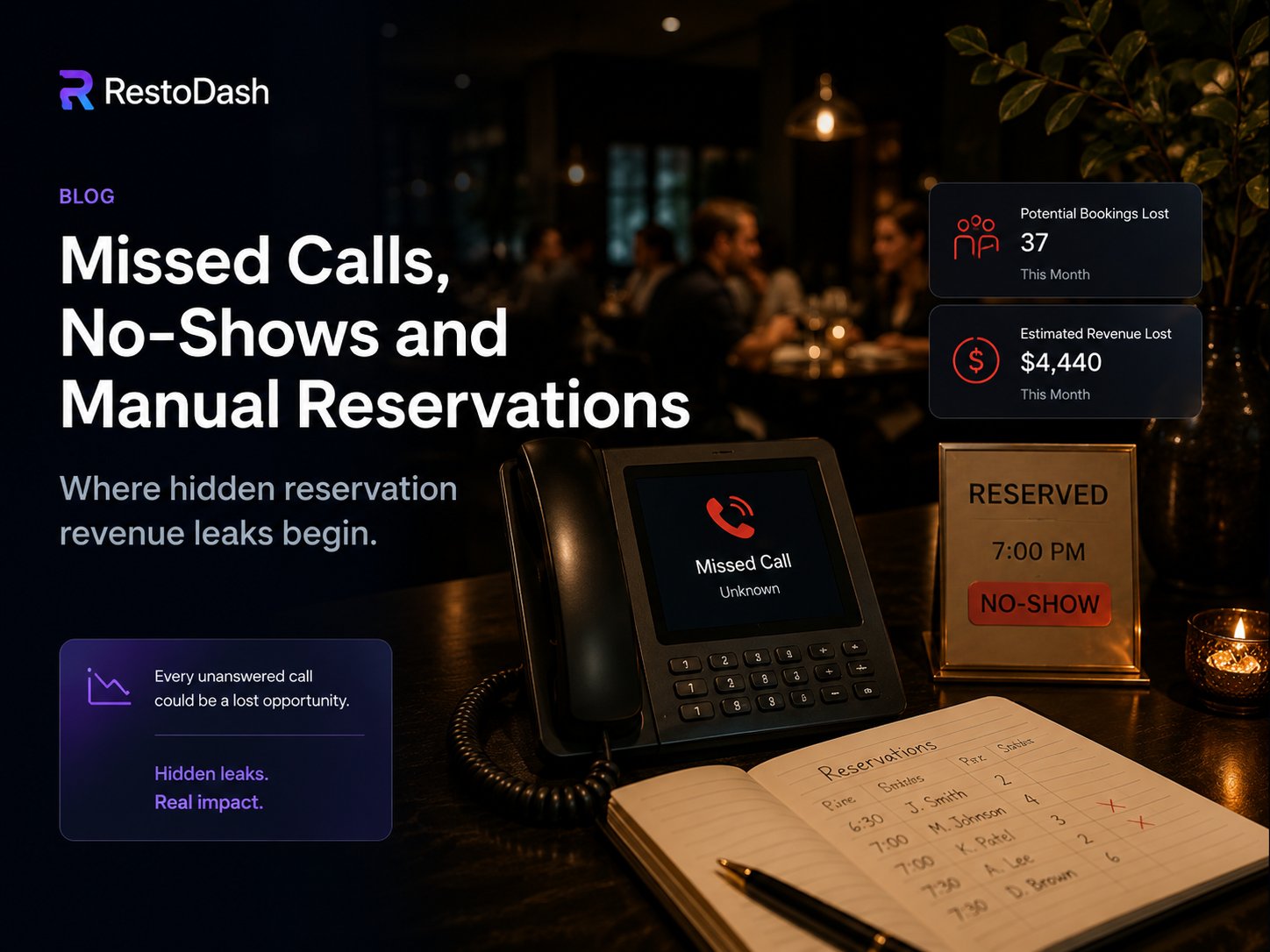
Missed calls are one of the most overlooked problems in restaurant operations. During lunch or dinner rush, staff are focused on guests inside the restaurant. That makes sense. But while the team is serving tables, new potential guests may be calling to book, ask about availability, check dietary options, or make changes to an existing reservation.
Industry estimates suggest that missed calls can create a major revenue loss across restaurants. QSR Magazine reported an estimate of more than $20 billion in annual lost revenue across the U.S. restaurant industry from unanswered calls. This figure should be treated as an industry estimate, but the operational problem is very real: when calls are not answered, some guests simply book somewhere else.
No-shows create another problem. OpenTable has reported that 28% of Americans said they had not shown up for a reservation in the previous year. Even a few empty tables during peak hours can hurt revenue because the restaurant may have refused walk-ins, held the table, planned staffing, and prepared inventory.
Manual reservations add a third layer of risk. When restaurants rely on notebooks, WhatsApp messages, memory, or scattered systems, important details can be lost: guest names, allergy notes, arrival status, special requests, and visit history.
If a restaurant misses 100 calls per month, and only 30 of those calls would have become bookings, with an average party value of $120, that is $3,600 in monthly potential revenue.
That is not guaranteed revenue, but it is a leak worth tracking.
RestoDash helps restaurants reduce these hidden leaks by combining AI voice reservations, guest notes, QR check-ins, no-show visibility, and a live dashboard in one place.
The goal is simple: fewer missed opportunities, more control, and more seated guests.
02
Voice Reservations
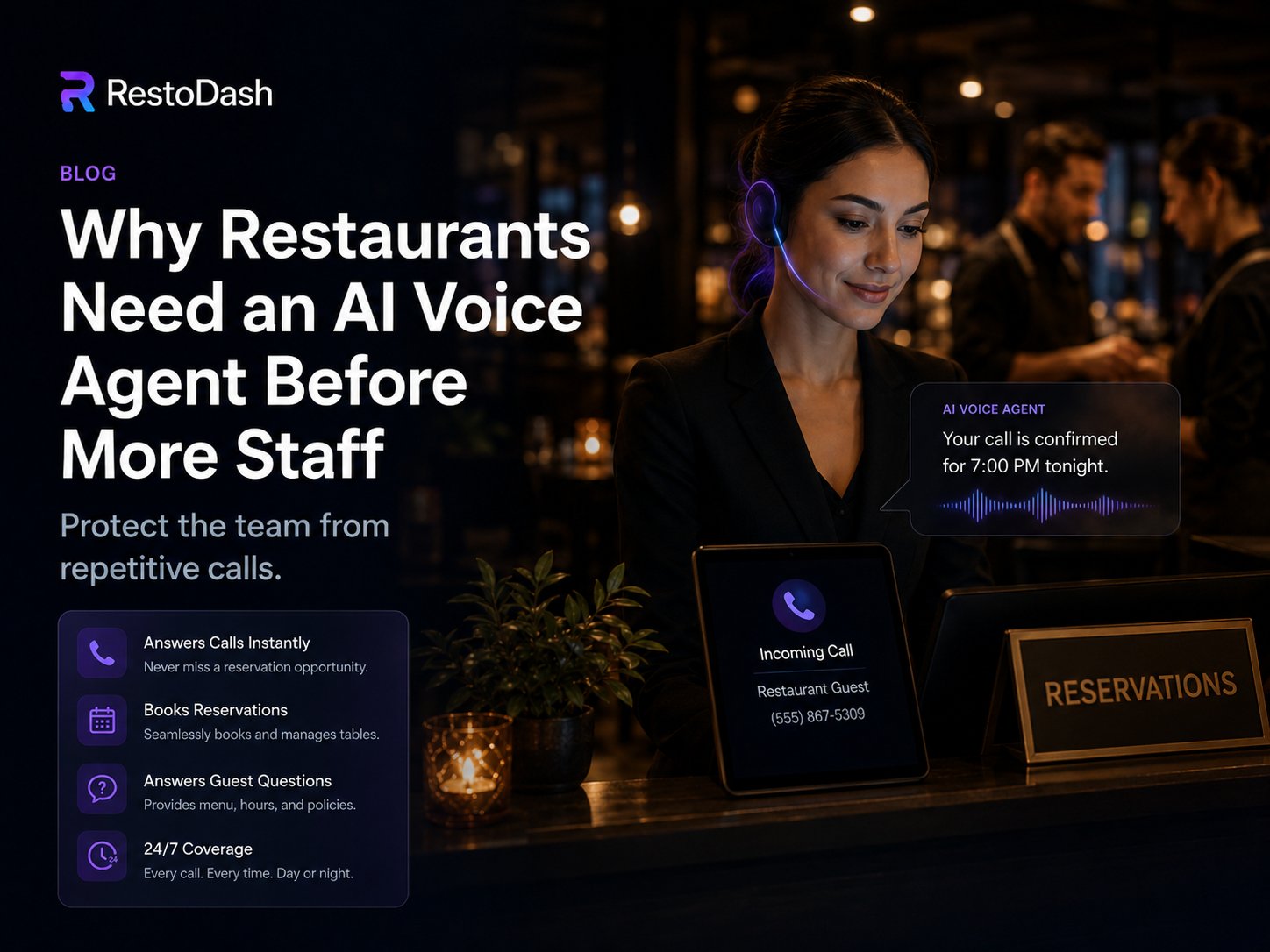
Why Restaurants Need an AI Voice Agent Before They Need More Staff
When a restaurant gets busy, the phone often becomes a problem.
The team is already handling guests at the door, table changes, food delays, walk-ins, delivery drivers, and service issues. Answering every call quickly becomes unrealistic.
But from the guest's point of view, the phone call still matters.
- They may be trying to book a table.
- They may want to ask about gluten-free options.
- They may need parking information.
- They may want to change their reservation time.
- They may be calling after business hours.
If nobody answers, the guest does not always wait. They may search for another restaurant, book online somewhere else, or give up completely.
Hiring more staff sounds like the obvious answer, but it is not always the most efficient first step. A full-time staff member costs money every month, still needs training, and still cannot answer multiple calls at the same time while the restaurant is under pressure.
An AI voice agent solves a different problem. It does not replace hospitality. It protects the team from repetitive calls and helps guests get answers instantly.
A well-designed AI voice agent can answer reservation calls, collect guest details, ask for party size, date, and time, answer common questions, add notes such as gluten-free requests, send booking details into the dashboard, confirm the reservation, and work outside normal office hours.
This matters because many calls are simple. Guests often ask the same questions again and again: "Do you have Wi-Fi?", "Is parking available?", "Do you have outdoor seating?", "Can I book for tonight?"
With RestoDash, the AI voice agent handles the first layer of communication while the dashboard keeps the restaurant team informed. The team still controls the guest experience, but they no longer need to stop everything just to answer repetitive calls.
For restaurants, this is not about removing people. It is about giving the team more time for the guests already inside the restaurant, while still capturing new bookings outside the dining room.
03
No-Show Control
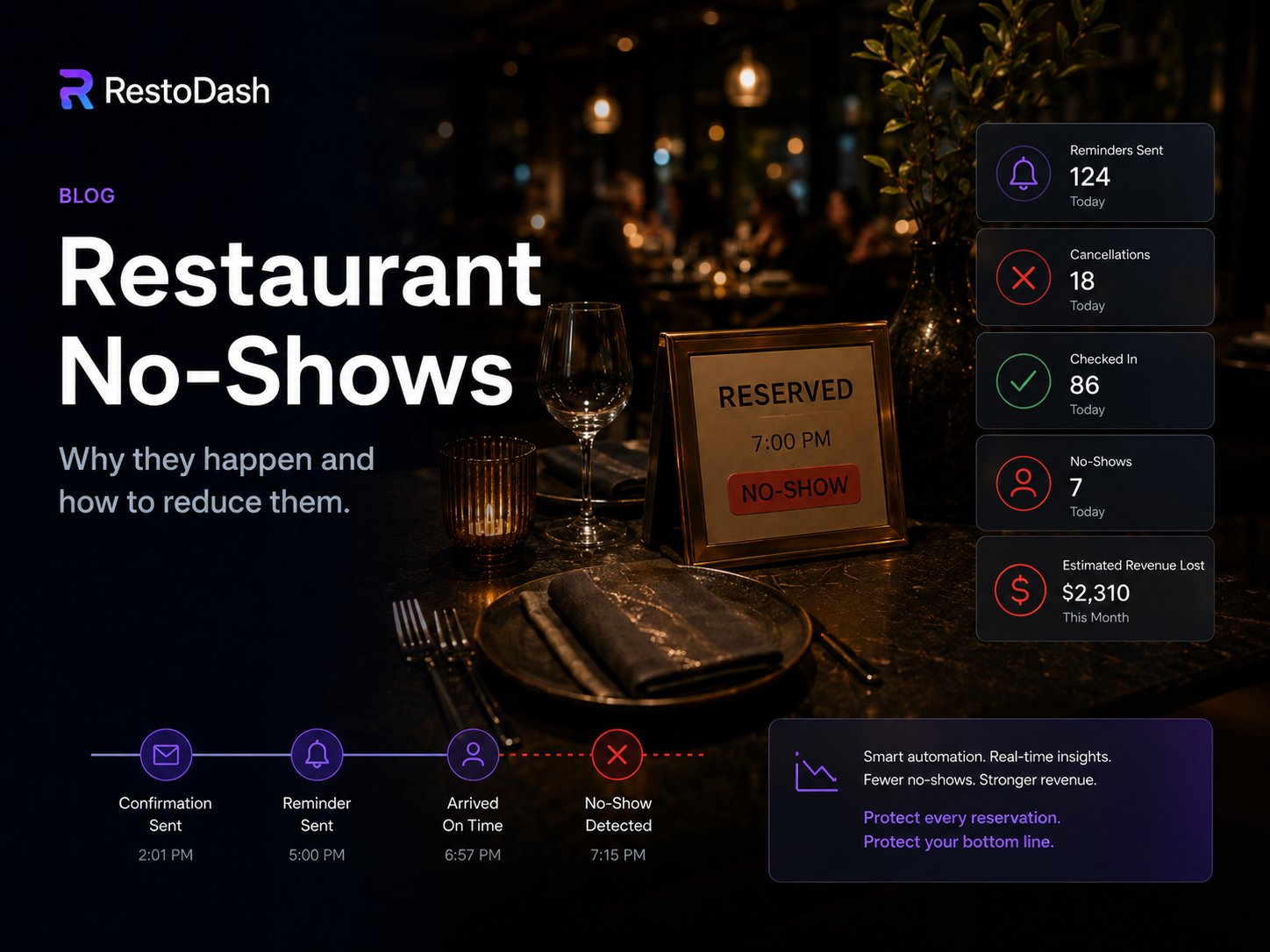
Restaurant No-Shows: Why They Happen and How to Reduce Them
A no-show happens when a guest books a table and does not arrive. It sounds simple, but the cost is not simple.
A no-show can mean an empty table during peak time, lost revenue, wasted preparation, and missed walk-in guests who could have taken that table. OpenTable shared an example where a table of four that does not show up can represent a $250-$300 loss for one restaurant.
No-shows happen for many reasons. Some guests forget. Some book multiple restaurants and decide later. Some do not know how to cancel. Some change plans and do not think about the impact. Some assume the restaurant will fill the table anyway.
The problem is that restaurants often only see the result: the guest is not there.
To reduce no-shows, restaurants need better visibility before and during service. The first step is confirmation. Guests should receive a clear confirmation message after booking. The second step is a reminder before the reservation. The third step is arrival tracking.
RestoDash is designed around that operational flow: booking confirmed, reminder sent, guest arrived, guest seated, no-show detected.
The goal is not to punish every guest. A guest may have a genuine reason for missing a reservation. But restaurants need data. If one guest misses once, that is different from a guest who repeatedly books and never arrives.
Reducing no-shows is not about one feature. It is about a better reservation process: confirmation, reminders, check-ins, visibility, and guest history.
04
VIP Loyalty
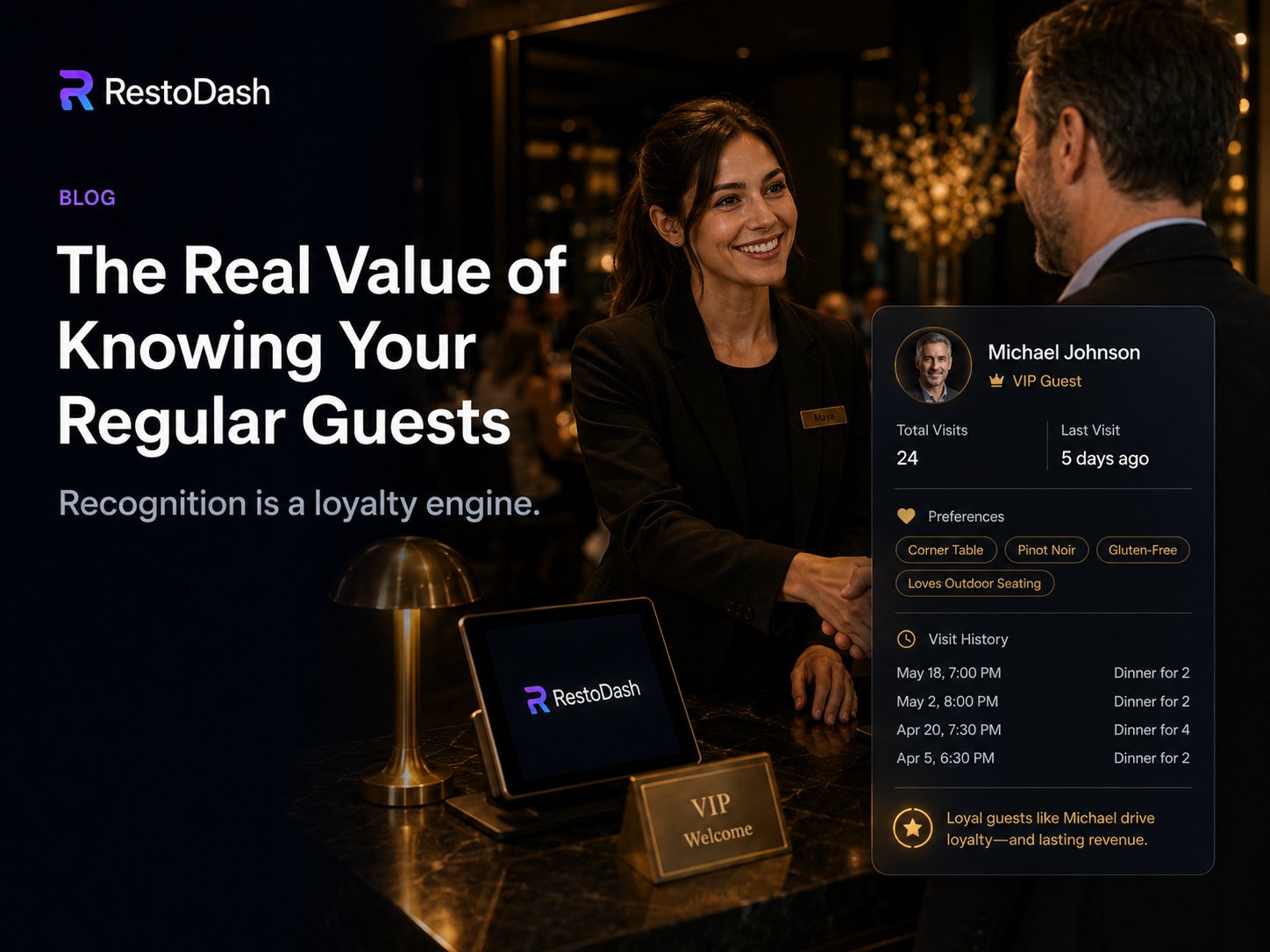
The Real Value of Knowing Your Regular Guests
Every restaurant wants loyal guests. But many restaurants still rely on memory to recognize them.
A manager may know some regulars personally. A server may remember a favorite table. A hostess may recognize a name. But memory is not a system, and it becomes weaker as the restaurant gets busier, staff changes, or guest volume grows.
This is where guest data becomes valuable. If a guest visits five times in one month, the team should know. If a guest always requests gluten-free options, the team should know. If a guest often books for business dinners, the team should know.
Modern restaurant hospitality is not only about good food. It is about recognition.
The Guardian reported that UK restaurants have increasingly used personalized reservation and marketing strategies to bring guests back, including confirmations, reminders, feedback requests, and targeted communication. The same report cited SevenRooms data saying restaurants saw an average of GBP 727 in revenue from every automated email campaign.
That does not mean every restaurant should spam guests with messages. In fact, too much communication can damage trust. But smart, relevant communication can improve the guest relationship.
- A guest with 5+ visits in a month can be marked as VIP.
- A guest with dietary notes can be flagged before arrival.
- A guest who repeatedly no-shows can be reviewed.
- A regular guest can receive better service because the team is prepared.
Loyalty is not only points and discounts. In hospitality, loyalty often starts with one simple feeling: "They remember me here."
05
GuestBook
QR Check-In for Restaurants: Small Step, Big Operational Control
Most restaurant teams know when a guest has a reservation. The bigger problem is knowing what happens next.
Did the guest arrive? Were they seated? Did they cancel? Are they late? Is the table still being held? Did the team mark the reservation correctly?
During a busy service, this information can become messy very quickly.
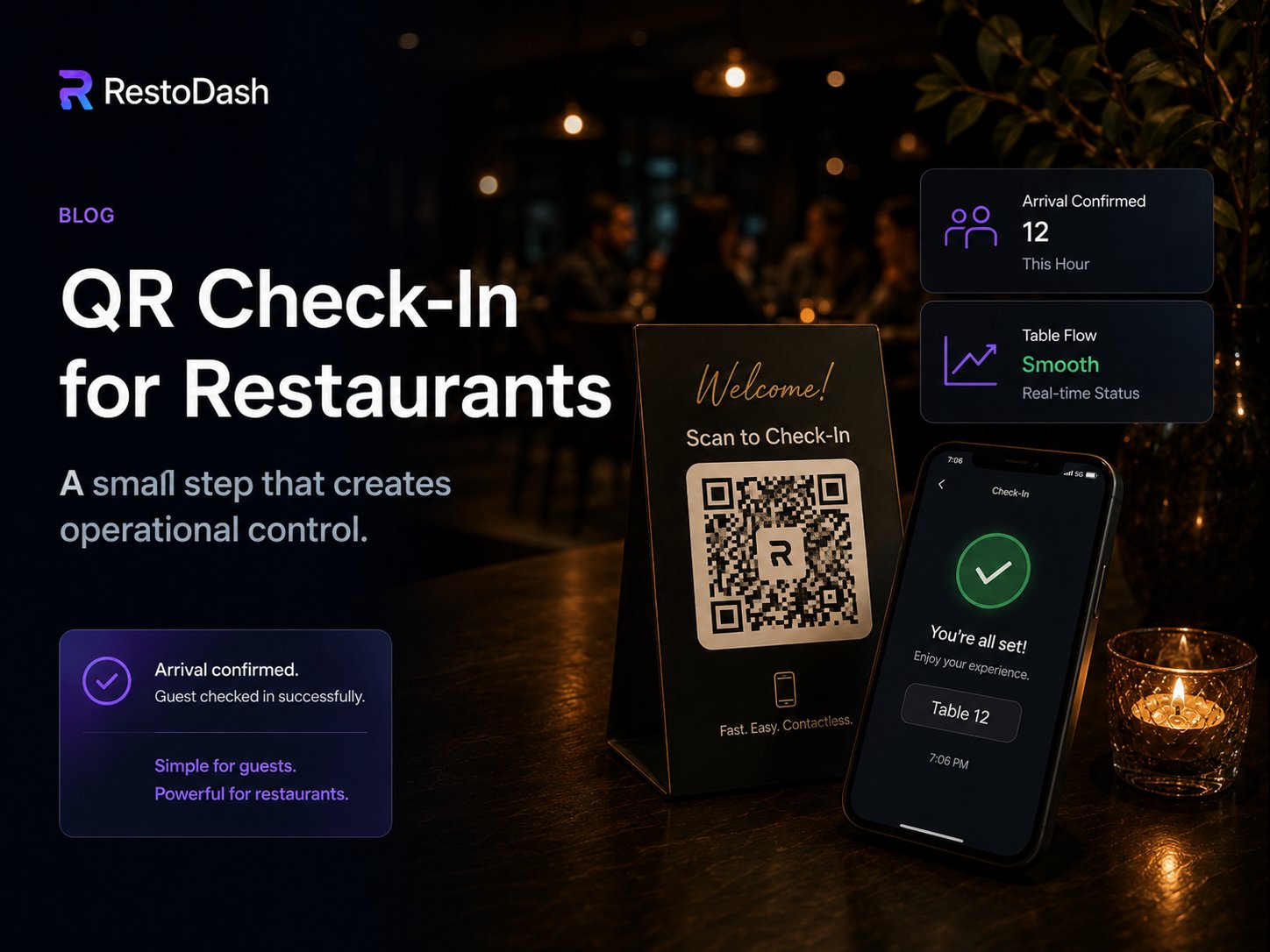
A QR check-in system gives the restaurant a simple way to confirm guest arrival and update reservation status. It does not need to be complicated. The guest arrives, the team checks them in, and the dashboard updates.
Without check-in visibility, the restaurant may continue holding a table for a guest who is already seated, or may not realize a guest has not arrived. This can make it harder to manage walk-ins, table turns, and no-shows.
With QR check-in, the team can see reservation flow more clearly: confirmed, arrived, guest seated, cancelled, and no-show.
QR check-in also helps protect guest data. Instead of writing notes across paper, chat messages, or random spreadsheets, the reservation status can stay connected to the guest profile.
RestoDash uses QR check-in as one part of the larger reservation workflow. The AI voice agent can create the booking, the dashboard can display the reservation, and the QR check-in can confirm arrival.
06
Operations
Manual Reservations Are Costing Restaurants More Than They Think
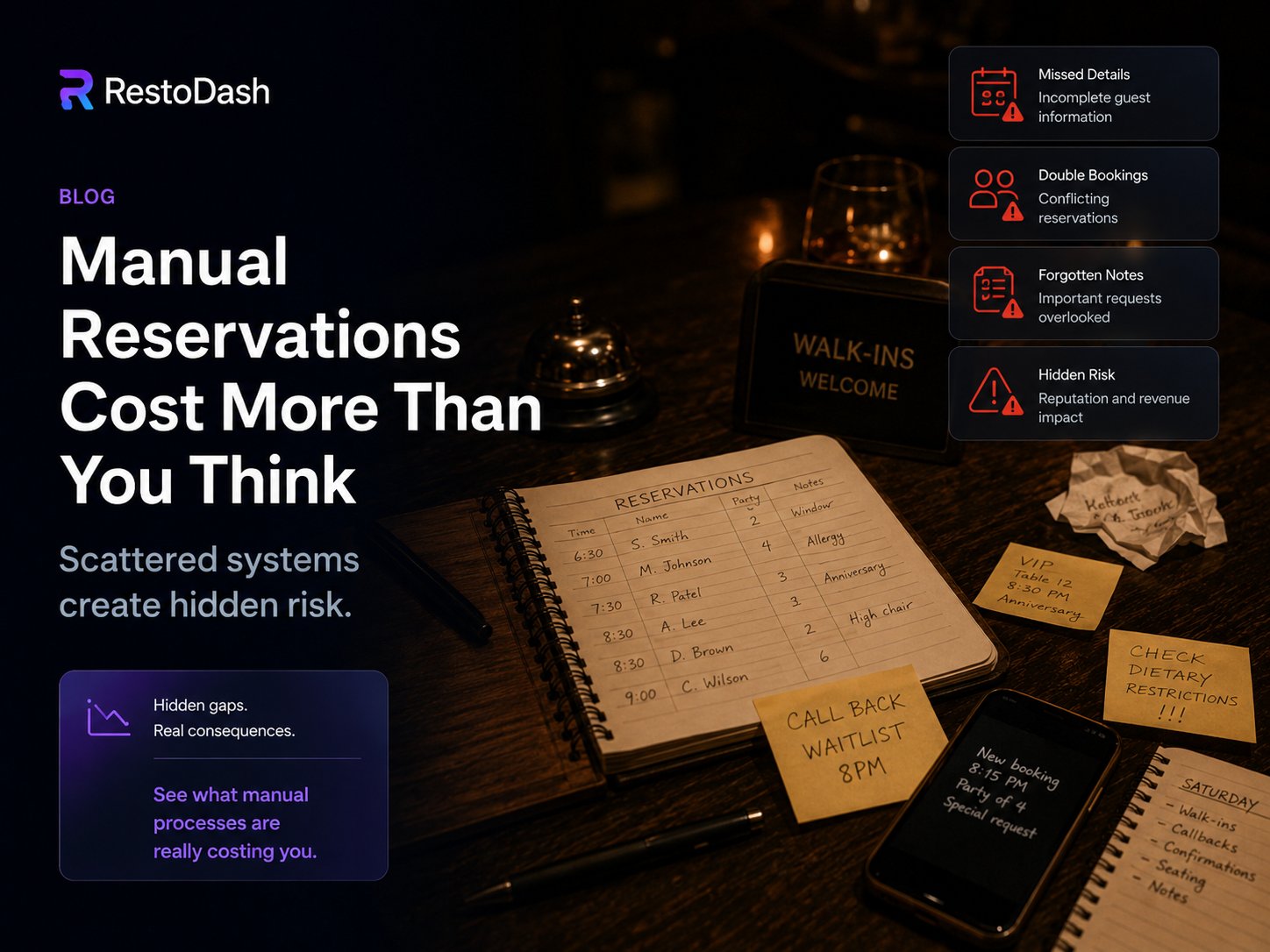
Manual reservations can feel simple: a notebook, a phone call, a WhatsApp message, a spreadsheet, or a staff member who "knows the regulars."
For small restaurants, this can work for a while. But as booking volume grows, manual systems start creating hidden costs.
The problem is not only that manual reservations take time. The bigger problem is that they create gaps.
- Guest details can be written incorrectly.
- Phone numbers can be missed.
- Special requests can be forgotten.
- Allergy notes may not reach the right person.
- No-shows may not be tracked.
- VIP guests may not be recognized.
These are operational issues, but they become revenue issues. A missed allergy note can damage trust. A forgotten booking can create a bad review. A missed VIP guest can reduce loyalty. A no-show that is never tracked can happen again.
A modern reservation workflow should answer simple questions: who is coming, when they are coming, how many guests, what they need, whether they arrived, whether they are regulars, and whether they cancelled or no-showed.
RestoDash is built to reduce those blind spots. The AI voice agent can collect booking details. The dashboard can show reservation status. QR check-in can confirm arrival. Guest notes can capture important information like gluten-free options, parking questions, or special requests.
Manual systems often look free, but they can cost time, accuracy, guest experience, and missed revenue.
07
Hospitality
AI in Restaurants Is Not Replacing Hospitality. It Is Protecting It.
Many restaurant owners are cautious when they hear the word AI. That is understandable.
Restaurants are human businesses. Guests want warmth, attention, service, and atmosphere. Nobody wants a restaurant to feel cold or automated.
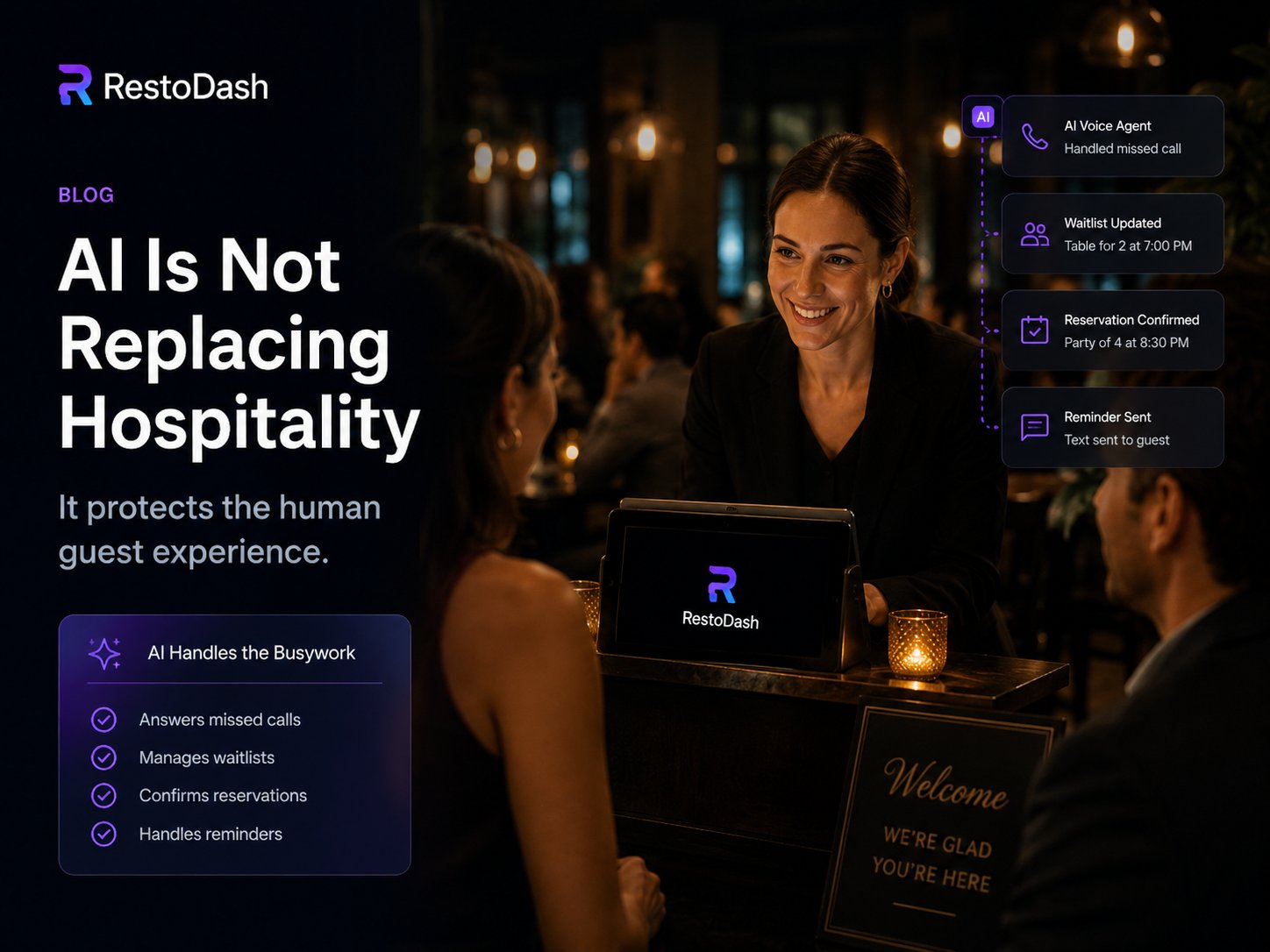
But the best use of AI in restaurants is not to replace hospitality. It is to protect it.
A restaurant team should be focused on the guests inside the restaurant: greeting them, seating them, solving problems, explaining dishes, managing timing, and creating a memorable experience.
But too often, the team is pulled away by repetitive tasks: answering the same questions, taking basic reservation details, checking availability, repeating Wi-Fi information, explaining parking, confirming booking times, and handling simple changes.
An AI voice agent can handle the first layer of communication so the team can stay present with guests.
Good AI does not pretend to be hospitality. Good AI supports hospitality.
If a guest asks about gluten-free options, the AI can answer and add a note to the reservation. When the guest arrives, the team already knows. That creates a better human experience, not a worse one.
The restaurant keeps control. The team keeps the relationship. The guest still receives service. AI simply makes sure fewer opportunities are missed and fewer details fall through the cracks.
08
RestoDash OS
Why Restaurants Need a Live Reservation Dashboard
A restaurant reservation is not just a name and a time. It is part of a live operation.
The team needs to know who is arriving, who is late, who has special requests, who has checked in, who is a regular, and which tables may be at risk of becoming no-shows.
Without a live dashboard, this information often lives in too many places. One person knows the booking. Another person knows the guest arrived. A manager knows the guest is important. A server knows about the allergy. Someone else has the phone number.
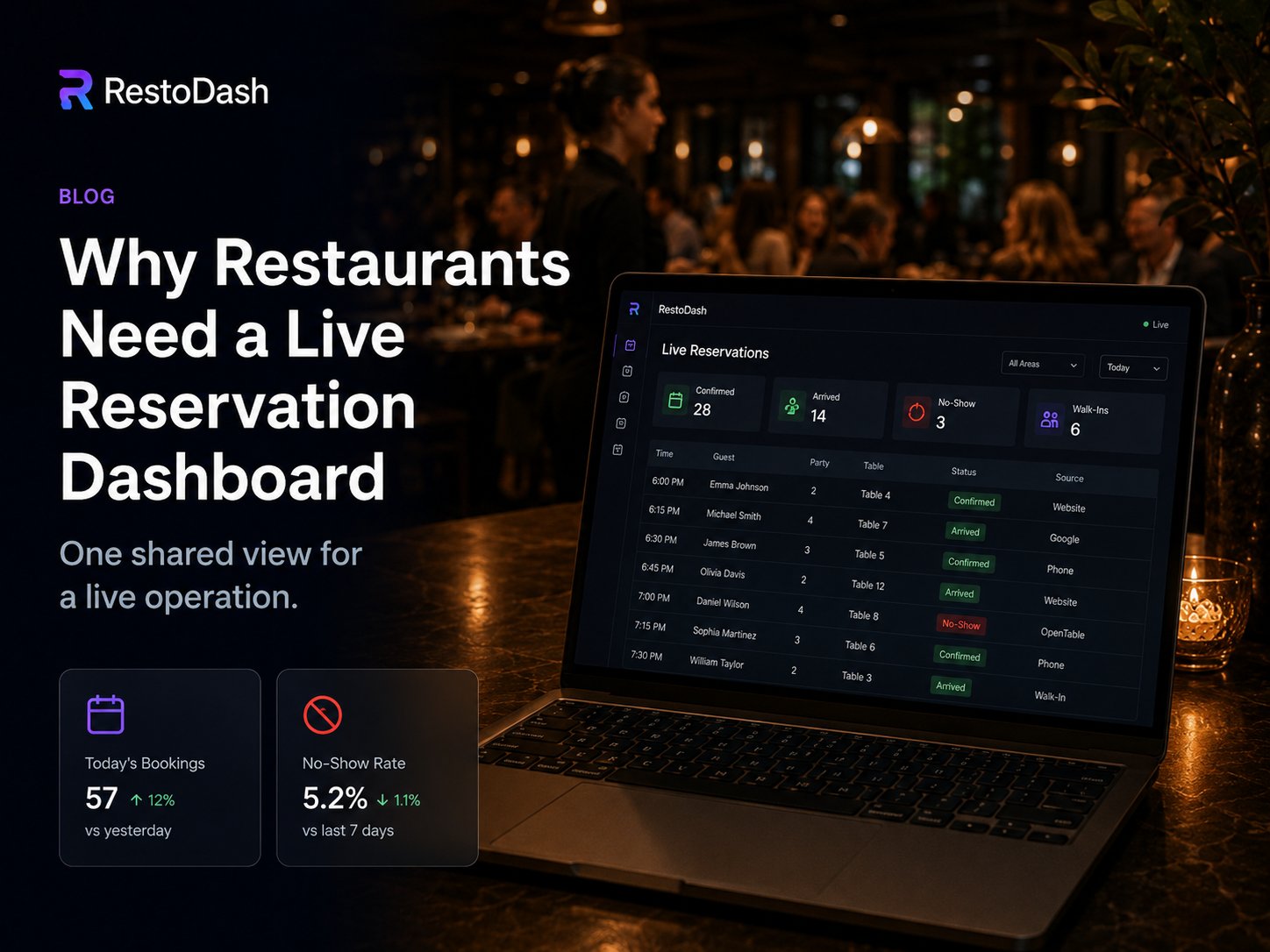
When information is scattered, service becomes harder. A live reservation dashboard gives the restaurant one shared view of the operation.
- What reservations are confirmed?
- Which guests have arrived?
- Which tables are waiting?
- Which bookings are no-shows?
- Which guests have notes?
- Which guests are VIP or repeat visitors?
This matters because restaurant service moves quickly. A system that updates after service is useful for reporting, but a system that updates during service is useful for control.
RestoDash gives restaurants that live layer. When the AI voice agent takes a reservation, the booking can appear in the dashboard. When the guest arrives, QR check-in can update the status. When a guest has a special request, the team can see it. When someone does not arrive, the no-show status becomes visible.
A good dashboard should not overload staff with data. It should show the right information at the right time.
In a busy restaurant, control is everything. That is why a live reservation dashboard is no longer just a "nice to have." For modern restaurants, it is becoming part of the operating system.